A Systematic Withdrawal Plan takes a fixed amount out of an invested corpus on a schedule, usually monthly. It is the retirement counterpart to a SIP, and it is harder, because accumulation forgives mistakes that decumulation does not. During accumulation a bad year is an opportunity to buy cheaply. During withdrawal, the same bad year forces you to sell more units to fund the same payment, and those units are gone.
That asymmetry has a name, sequence risk, and it is the single most important idea in this cluster. Two retirements with identical average returns can end very differently depending on whether the weak years arrive early or late. An average return is therefore a poor summary of a withdrawal plan, and any tool that reports only an average is hiding the risk you most need to see.
The practical questions are how much you can take, for how long, and what happens when you index the payment to inflation. Small changes to the withdrawal rate produce large changes in how long the corpus survives, which is not intuitive until you watch it happen. Run your own figures through the SWP calculator and try moving the withdrawal up by a small amount: the shortening of the horizon is usually much sharper than expected.
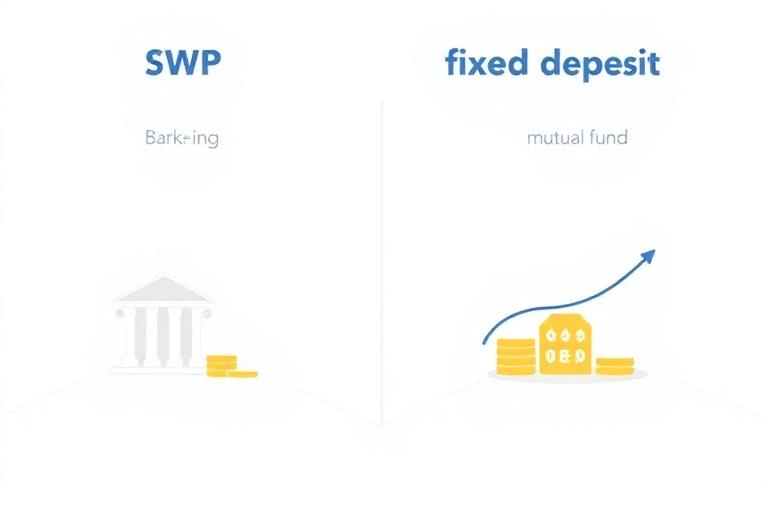
Comparisons with fixed deposits come up constantly and deserve a careful answer rather than a preference. A deposit offers certainty of payment and no growth beyond its rate. An SWP offers the possibility of the corpus outliving the payments and the possibility of it failing early. Those are different products for different tolerances, and which one is correct depends on facts about you rather than facts about the instruments.