
Learn how win rate, average win, average loss, and trading costs combine into expectancy, with a worked sample and important limits.
Clear, professional explanations of compounding, interest, investing, and planning concepts, written for beginners and decision makers. Use each guide to understand the concept, then validate your scenario with our calculators.
Learn how win rate, average win, average loss, and trading costs combine into expectancy, with a worked sample and important limits.

Learn how to calculate forex position size from account risk, stop distance, pip value, and currency conversion while recognising execution limits.

Learn how to stress test a retirement corpus with lower returns, higher inflation, early losses, fees, and spending changes without claiming certainty.

Learn how rising withdrawals affect a retirement portfolio, compare fixed and inflation linked spending, and test purchasing power without guarantees.

Learn what a retirement cash buffer can do, how to size it from spending and income, and why reserves have limits and opportunity costs.
Learn how withdrawal order affects longevity, liquidity, and taxes, and compare a simple sequence using transparent assumptions instead of a universal rule.

Learn what regular contributions do during a market fall, when continuing may fit a plan, and why cash needs and allocation matter more than slogans.

Build a SIP goal plan by defining the future cost, date, contribution path, return range, and review rules without presenting projections as promises.

Learn how a step up SIP raises contributions as income changes, calculate the effect, and test affordability instead of relying on an assumed return.

Work backward from a target value using a monthly contribution formula, inflation aware assumptions, and practical checks for affordability.

Understand how fixed contributions buy more units at lower prices, while recognising the opportunity cost, volatility, fees, and behavioural limits.
Separate risk capacity from risk tolerance and learn how goals, income, reserves, debt, and time horizon shape an investment plan.
See why the order of gains and losses matters when money is withdrawn, with a transparent example and ways to stress test a spending plan.

Learn why portfolios drift, compare calendar and threshold rebalancing, and use contributions or withdrawals to reduce unnecessary trading.
Learn how asset allocation divides a portfolio among growth, defensive, and cash assets, and how time horizon and capacity shape a sensible mix.

Learn why some loan balances rise despite payments, how unpaid interest is capitalised, and how to identify payment shock and payoff risk.
Learn how principal, periodic interest, amortisation, payment timing, fees, and extra payments determine the real cost of a loan.
Understand how a discount rate converts future cash flows into present value, what belongs in the rate, and why sensitivity analysis matters.

Learn why nominal and effective rates differ, how compounding creates the gap, and how to compare savings and borrowing costs on one basis.

Learn how reinvesting interest, distributions, and realised gains changes future value, and how costs, taxes, risk, and cash needs affect the choice.

Compare annual, quarterly, monthly, weekly, and daily intervals while accounting for rate conventions, cash flow timing, and product terms.

Understand continuous compounding, the constant e, its relationship to periodic compounding, and where the model is useful or misleading.
Learn what compound frequency changes, how to compare annual, monthly, and daily schedules, and which figures matter when evaluating an account.

Learn how to build wealth from scratch using budgeting, saving, investing, and compounding strategies. A practical guide for beginners with no existing savings or investment experience.

Explore the best free online investment calculators for compound interest, SIP, SWP, forex, and more. Learn which calculator to use for your specific financial planning needs.
Discover the top compound interest investment strategies to maximize wealth growth. Learn about reinvestment, frequency optimization, and long term compounding approaches.
Discover how professional traders compound profits consistently. Learn position sizing, risk management, reinvestment strategies, and the psychological discipline behind sustainable trading growth.

Learn how daily forex compounding works, realistic daily return targets, and how to use a forex compound calculator to project daily returns into long term account growth.

Learn how to grow your forex trading account through systematic compounding. Understand lot sizing, risk management, and use our forex compound calculator to project account growth.
Learn the best SWP withdrawal strategies to maximize monthly income while preserving your investment capital. Includes bucket strategy, dynamic withdrawal, and safe withdrawal rate approaches.
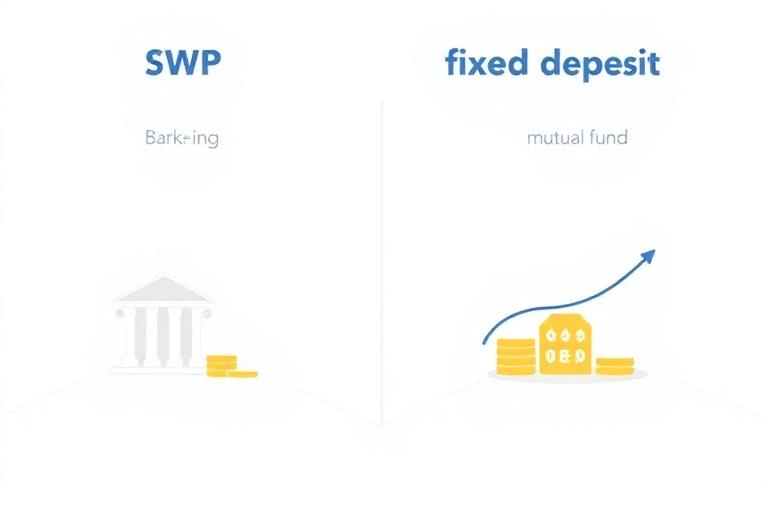
Compare Systematic Withdrawal Plan (SWP) with Fixed Deposits for generating regular income. Understand returns, taxation, flexibility, and which suits your financial goals better.
Learn how to use a Systematic Withdrawal Plan (SWP) for retirement income. Plan monthly withdrawals, preserve capital, and calculate how long your money will last.
Calculate how much monthly SIP investment you need to retire comfortably. Learn to factor in inflation, lifestyle costs, and use our SIP calculator for retirement planning.
Discover the best SIP investment strategies for beginners. Learn about step up SIP, fund selection, asset allocation, and how to maximize mutual fund returns with disciplined monthly investing.
Volatility feels scary short term, but time changes the probability of outcomes. Learn how horizon affects risk and how to plan contributions and withdrawals.
Learn how to start a Systematic Investment Plan (SIP) from scratch. This step by step guide covers choosing funds, setting amounts, and building long term wealth through disciplined monthly investing.

A 1% annual fee doesn’t sound like much, until it compounds for decades. Learn how fees reduce effective returns and how to model the tradeoff.

Retirement planning becomes clearer when you separate contributions, returns, and time horizon. Use this step by step framework to model realistic targets.
Debt can compound against you. Learn the difference between simple and compound interest in real world borrowing, and how small rate changes impact payoff.
APR is the nominal rate; APY reflects compounding. Learn how to compare loans and savings products correctly and avoid common traps.
CAGR summarizes growth as a single annualized rate, making it easier to compare investments. Learn how it’s calculated and what it hides.
Compounding in forex amplifies both gains and losses. Learn position sizing, drawdowns, and why realistic assumptions matter more than aggressive targets.
An SWP plan depends on withdrawal rate, returns, and volatility. Learn the key variables and model your withdrawal timeline with realistic assumptions.
Should you invest gradually (SIP) or invest upfront (lump sum)? Learn tradeoffs, timing risk, and how to compare outcomes realistically.

An emergency fund isn’t about maximizing returns. It’s about preventing forced selling and debt spirals. Learn sizing rules and how to build it efficiently.
A 7% return isn’t always ‘7% richer’ if inflation is 4%. Learn how real returns work and how to plan with more realistic assumptions.
Diversification reduces the risk of a single bad outcome ruining your goals. Learn how it works, what it can’t do, and how to plan contributions and timelines.
Daily compounding sounds dramatically better than monthly, but the difference is often modest. Learn why, when it matters, and how to compare scenarios.

The Rule of 72 is a quick way to estimate how long it takes for an investment to double. Learn when it works, where it breaks, and how to validate it with calculators.

Compound interest is the interest on your initial principal and all previously earned interest. Learn the formula, examples, and how to maximize your returns.