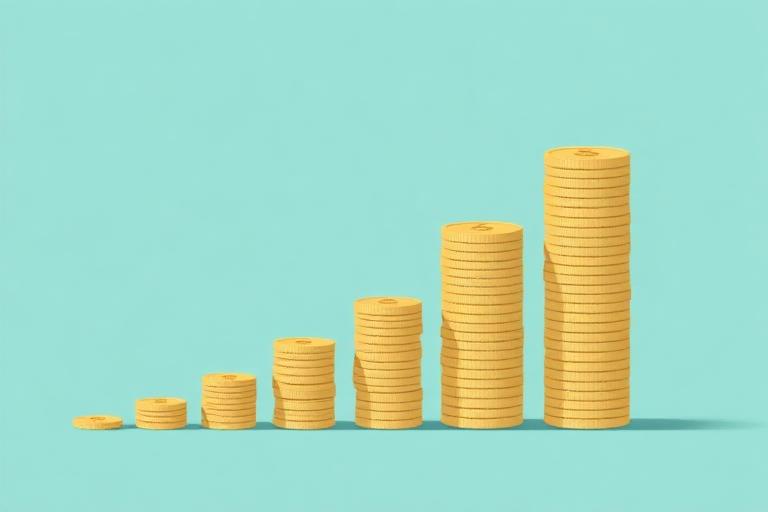
The difference between traders who build significant accounts and those who don't often comes down to one principle: compounding. Successful traders don't chase windfalls. They focus on consistent, modest returns and let reinvestment do the heavy lifting over months and years.
The compounding mindset
Professional traders think in terms of percentages, not dollar amounts. A 2% monthly return sounds modest, but compounded over 3 years, it turns $10,000 into approximately $20,300. The key insight is that consistency matters more than occasional large wins, which often come with equally large risks.
Position sizing: the compounding engine
As your account grows, your position size should grow proportionally. Risk a fixed percentage (typically 1 to 2%) per trade, not a fixed dollar amount. This means winning trades produce progressively larger dollar gains, while losing trades risk progressively larger amounts but the same percentage, which preserves the compounding curve.
The trap that undoes compounding
Many traders accidentally reverse compounding by withdrawing profits regularly, oversizing after wins, or undersizing after losses. True compounding requires leaving profits in the account to grow the base. Set a monthly withdrawal budget (e.g., 20% of profits) and reinvest the rest.
Trading compound calculator: plan your growth
Use our Forex Compound Calculator to project account growth at different return rates. Compare scenarios: what happens at 2% vs 5% monthly? How does reinvesting 80% vs 100% of profits change the outcome? The calculator makes these comparisons instant.
Risk management is not optional
- Never risk more than 2% of account on a single trade.
- Set maximum daily/weekly drawdown limits (e.g., 5% weekly).
- Reduce position size after consecutive losses.
- Take breaks after large drawdowns to reset psychology.
For more on this topic, read our forex compounding and risk management guide.
Conclusion
Compounding trading profits requires discipline, patience, and a long term perspective. Focus on consistent small gains, scale position sizes proportionally, protect capital during drawdowns, and let time amplify your results. Start modeling your growth trajectory with our Forex Compound Calculator.
FAQ
How do traders compound profits?
What percentage should traders reinvest?
Is 2% monthly return realistic in trading?
How does compounding differ from linear growth in trading?
What's the biggest enemy of compounding in trading?
Next step
Use the calculators to model your scenario with consistent assumptions, then compare outcomes across time horizons and contribution plans.